
When a Wedding Cannot Wait: Short-Notice Wedding Ceremonies in Devon and Cornwall
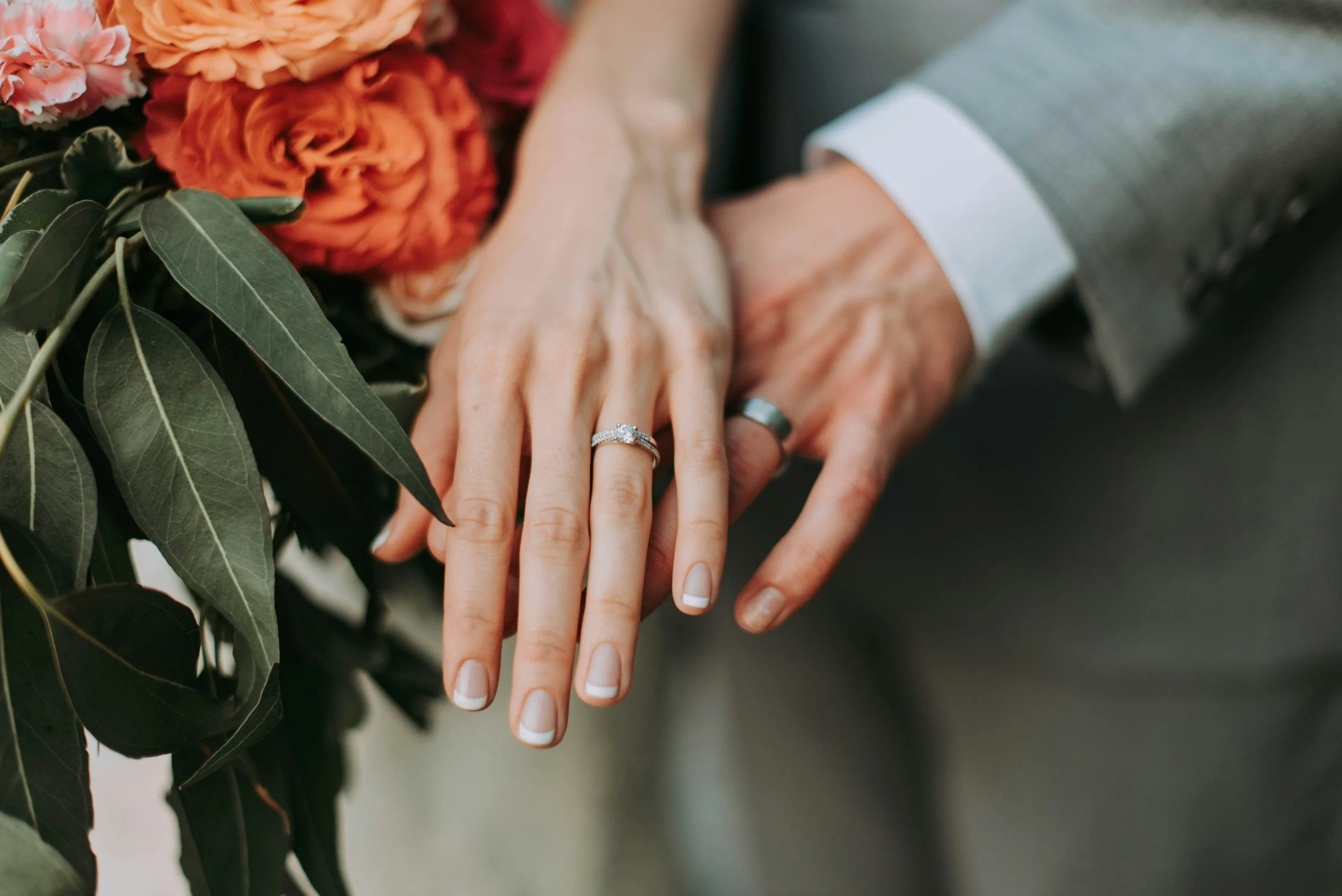
Some weddings are planned over years.
The venue is booked, the dress is chosen, the invitations go out, and every detail has time to slowly fall into place.
But sometimes, life changes everything.
A diagnosis, a hospice admission, a sudden deterioration in health, or the realisation that someone deeply loved may not be able to be there on the original wedding day can mean that a couple and their family need to bring a ceremony forward quickly. Sometimes there is no time for long planning meetings, endless decisions, or months of preparation. Sometimes what matters most is simply this:
We want to be together.
We want to say the words.
We want this person we love to be there.
As an independent wedding celebrant working across Devon and Cornwall, I have supported several families in these deeply sensitive circumstances, creating and delivering short-notice, celebrant-led wedding ceremonies when time has suddenly become very precious.
These ceremonies are never “less than” a traditional wedding.
In many ways, they are some of the most meaningful ceremonies I have ever had the privilege of leading.
What is a short-notice or urgent wedding ceremony?
A short-notice wedding ceremony is exactly what it sounds like: a ceremony arranged quickly because circumstances mean the couple cannot wait.
Sometimes this is because a parent, grandparent, partner, sibling or close family member is terminally ill. Sometimes a ceremony needs to take place in a hospice, hospital, care home, private home, garden, family room, or other setting that would never have been part of the original plan.
People sometimes search for this as an “emergency wedding”, “hospice wedding” or even a “deathbed wedding”. I understand why those terms are used, but they can feel very stark. I tend to think of these ceremonies as compassionate circumstance weddings — ceremonies created when love, family and time all come sharply into focus.
The setting may be simple. The guest list may be small. The plans may come together in days rather than months.
But the heart of the ceremony remains the same: two people making promises to one another, surrounded by the people who matter most.
Is a celebrant-led wedding legally binding?
This is an important distinction.
As an independent celebrant, I can create and lead a personal, meaningful, symbolic wedding ceremony, but I cannot legally marry a couple in England or Wales ... yet! Wedding law reform is being considered by the government, if you’d like to know more on that topic please see my dedicated blog post on the subject.
A celebrant-led wedding ceremony is not the legal marriage itself. It does not replace the legal process, and it does not create a legally recognised marriage.
However, for many families in urgent or compassionate circumstances, the legal element may not be possible within the timeframe, or it may be something the couple intends to arrange separately. In those situations, a celebrant-led ceremony can still offer something incredibly powerful: a real, heartfelt moment of commitment, witnessed by loved ones, written around the couple and the circumstances they are facing.
If a couple does wish to explore whether a legal marriage or civil partnership is possible at short notice, they should contact their local register office as soon as possible. There are specific legal routes in some exceptional circumstances, particularly where one of the couple is seriously ill. That advice must come directly from the registration service.
My role is different.
My role is to help you create the ceremony itself — the words, the promises, the structure, the atmosphere, and the moment.
A note on the legal side:
If you need to explore whether a legal marriage or civil partnership is possible at short notice, especially where someone is seriously ill, you should contact your local register office as soon as possible. They will be able to advise on the legal options available. My role as a celebrant is to create and lead the personal ceremony itself — the words, vows, promises and symbolic moments that make the occasion meaningful.
What can be included in an urgent celebrant-led wedding ceremony?
Even when time is limited, a ceremony can still feel personal.
A short-notice ceremony does not have to be generic, rushed or impersonal. With the right approach, it can still include many of the elements people associate with a wedding ceremony, including:
the couple’s love story;
personal vows or simple repeated promises;
readings or poems;
music;
symbolic rituals;
exchange of rings;
involvement from children, parents or family members;
a commemorative certificate;
a quiet moment of reflection or remembrance;
words of thanks to those gathered.
The ceremony can be as simple or as detailed as the circumstances allow.
In some cases, the couple may want something very small and intimate — perhaps just a few family members in a hospice room. In other cases, there may be flowers, music, photography, confetti, cake, and all the familiar touches of a wedding day, just brought together much more quickly.
There is no right or wrong version.
The question I always come back to is: what does this couple need this moment to be?
How quickly can a ceremony be arranged?
Every situation is different, but I understand that these ceremonies often need to be arranged quickly.
I have experience creating ceremonies within very short timeframes, including ceremonies arranged in less than a week. When circumstances are urgent, I adapt the usual planning process so we can focus on what matters most.
That may mean a phone or video call with the couple, a short set of questions by email, communication through a family member who is helping to coordinate things, and a ceremony script created swiftly but carefully.
The process is calm, clear and practical.
I will usually need to know:
who the couple are;
how they met;
what they love about one another;
who will be present;
where the ceremony will take place;
whether vows or rings are being exchanged;
whether any family members need to be acknowledged;
whether the tone should be romantic, gentle, uplifting, simple, spiritual, non-religious, or a blend of these.
The aim is not to burden the couple with lots of work. The aim is to gather just enough to create something that feels like them.
Ceremonies in hospices, hospitals, care homes and private homes
Short-notice ceremonies often take place somewhere deeply personal or medically sensitive.
That might be a hospice in Devon, a hospital room in Plymouth, a care setting in Cornwall, a family home, or a small private space arranged by staff.
In these environments, sensitivity matters.
The ceremony may need to work around medication, tiredness, visiting times, room access, medical equipment, staff guidance, or the emotional needs of the family. A good celebrant needs to be flexible, calm and able to read the room.
Sometimes the ceremony needs to be brief. Sometimes it needs to pause. Sometimes things change on the day.
That is okay.
These ceremonies are not about perfection in the polished, wedding-magazine sense. They are about presence. They are about love being spoken aloud while it still can be. They are about making space for something beautiful in the middle of something incredibly difficult.
A compassionate approach to fees
I am a professional celebrant, and this is my business. But I also understand that families arranging a ceremony in these circumstances may already be under enormous emotional, practical and financial pressure.
For urgent ceremonies connected to terminal illness, hospice care, or similarly compassionate circumstances, I may be able to offer a reduced short-notice fee.
I approach this on a case-by-case basis, depending on location, availability, travel, preparation time and what is needed for the ceremony.
The important thing is that we speak honestly and quickly. If I can help, I will.
Why choose an experienced celebrant for this kind of ceremony?
A short-notice ceremony in sensitive circumstances needs more than someone who can simply stand up and speak.
It needs someone who can listen carefully, write quickly, stay calm, communicate clearly, and hold the emotional weight of the moment without making it feel heavy.
My work as a celebrant over the past decade spans weddings, funerals, memorials and family ceremonies. That combination of experience matters in these situations, because an urgent wedding connected to terminal illness often carries both joy and sadness in the same breath.
There is celebration, but there may also be grief.
There is love, but there may also be fear.
There is happiness, but there may also be the knowledge that time is limited.
A ceremony like this needs to honour all of that gently.
It should not feel gloomy. It should not feel rushed. It should not feel like a compromise.
It should feel like a moment the couple and family can hold onto.
Supporting families across Devon and Cornwall
I am based in the South West and primarily work across Devon and Cornwall, including Plymouth, South Devon, North Devon, West Devon, East Cornwall and surrounding areas.
If you need a short-notice wedding celebrant in Devon or Cornwall because a loved one is seriously ill, in hospice care, or may not be able to attend a future wedding date, please do get in touch.
You do not need to have everything worked out before contacting me.
You may only know that you need to do something quickly.
That is enough.
I can talk you through what is possible, what information I need, how a celebrant-led ceremony works, and how we can create something meaningful in the time available.
Frequently asked questions
Can you legally marry us?
No. As an independent celebrant, I cannot legally marry you in England or Wales. I can create and lead a personal, symbolic wedding ceremony. If you need advice about a legal marriage or civil partnership at short notice, you should contact your local register office.
Can we still exchange vows and rings?
Yes. A celebrant-led ceremony can include vows, rings, readings, music, symbolic rituals, family involvement and a commemorative certificate.
Can the ceremony take place in a hospice or hospital?
Yes, provided the venue or care setting gives permission. I will always respect the guidance of hospice, hospital, care home or medical staff.
How quickly can you arrange a ceremony?
This depends on my availability and the location, but I have experience supporting ceremonies arranged within a very short timeframe. Please contact me as soon as possible and I will let you know honestly what is possible.
Do you offer special rates for urgent compassionate circumstances?
Where a ceremony is needed because of terminal illness, hospice care or similar compassionate circumstances, I may be able to offer a reduced fee. Please contact me and I will talk this through with care and clarity.
When time is precious, the ceremony still matters
A wedding ceremony does not need months of planning to be meaningful.
It needs honesty.
It needs love.
It needs the right words.
It needs someone calm enough to hold the moment and careful enough to make it feel personal.
When time is short, there is still time to create something beautiful.
If you are looking for a short-notice wedding celebrant in Devon or Cornwall, or need help arranging an urgent celebrant-led ceremony for compassionate reasons, please get in touch. I will respond as quickly as I can.